Curated visual archives of German military trades and everyday field life — preserved for research, reconstruction, and remembrance.
This ongoing project gathers original photographs of the working specialists who kept the German Army functioning in two world wars: Schusters (shoemakers), Schneiders (tailors), and related craftsmen. These men — and occasionally women — mended boots, altered uniforms, stitched insignia, repaired equipment, and improvised solutions far from any permanent workshop. Their work rarely appears in official propaganda, yet it was essential to every march, every deployment, and every campaign. The galleries here are arranged by trade and time period and are intended as a resource for historians, collectors, reenactors, and material culture researchers. In the future, this archive will expand to include scenes of camp life, bunkers and fieldworks, training, cooking and mess operations, and other glimpses of everyday life behind the front line. Each image has been selected for the details it preserves — tools on the bench, stitching on a boot, the cut of a tunic, or the layout of a field workshop — so that the quiet, technical side of war can be studied with the same care as uniforms and weapons.
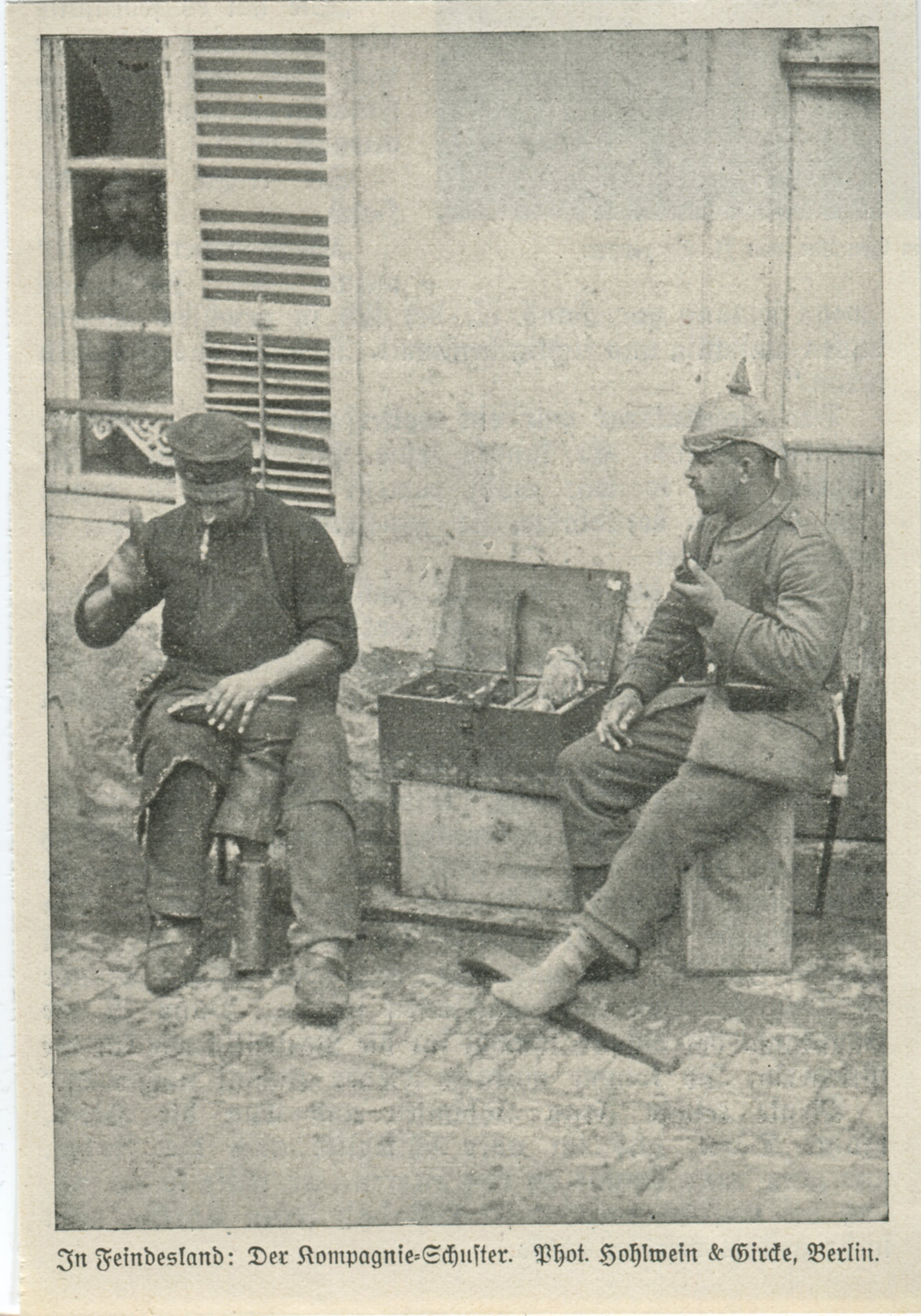
WW1 Schuster (Shoemakers)
Field cobblers and boot makers of the Great War — repairing marching boots and keeping units on their feet.
%20Paul%20Schrader-Satler,%20Otto%20Flade-Schuster,%20Otto%20Weidner%20-Schuster,%20Zickelbein,%20Schneider,%20Gunther%20Ewert--Vormarsch.jpg)
WW2 Schuster (Shoemakers)
Company and divisional shoemakers working from trucks, barns, and tents across Europe and beyond.
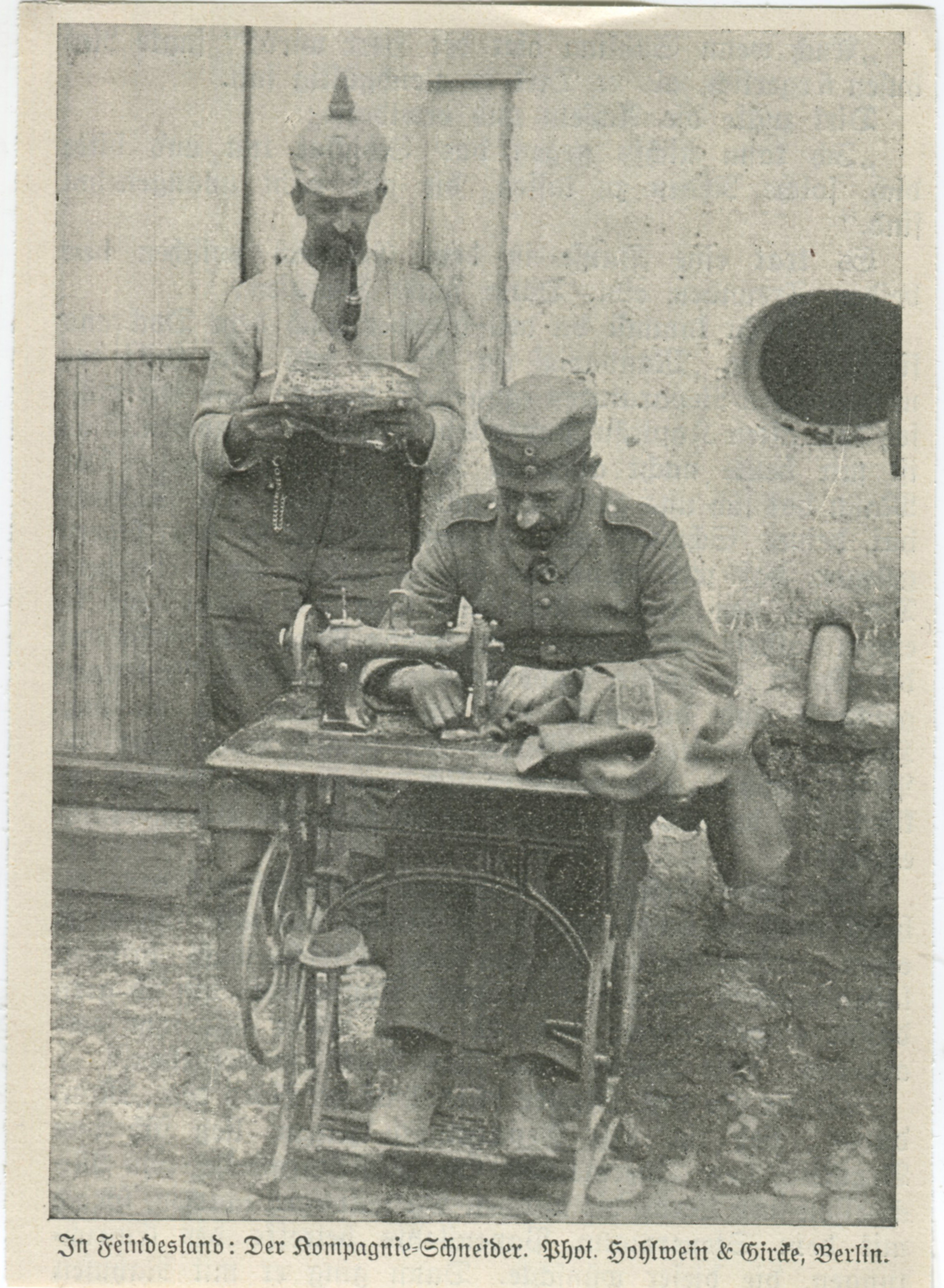
WW1 Schneider (Tailors)
Tailors of the Kaiser’s army, adjusting uniforms and attaching insignia in improvised rear-area workshops.
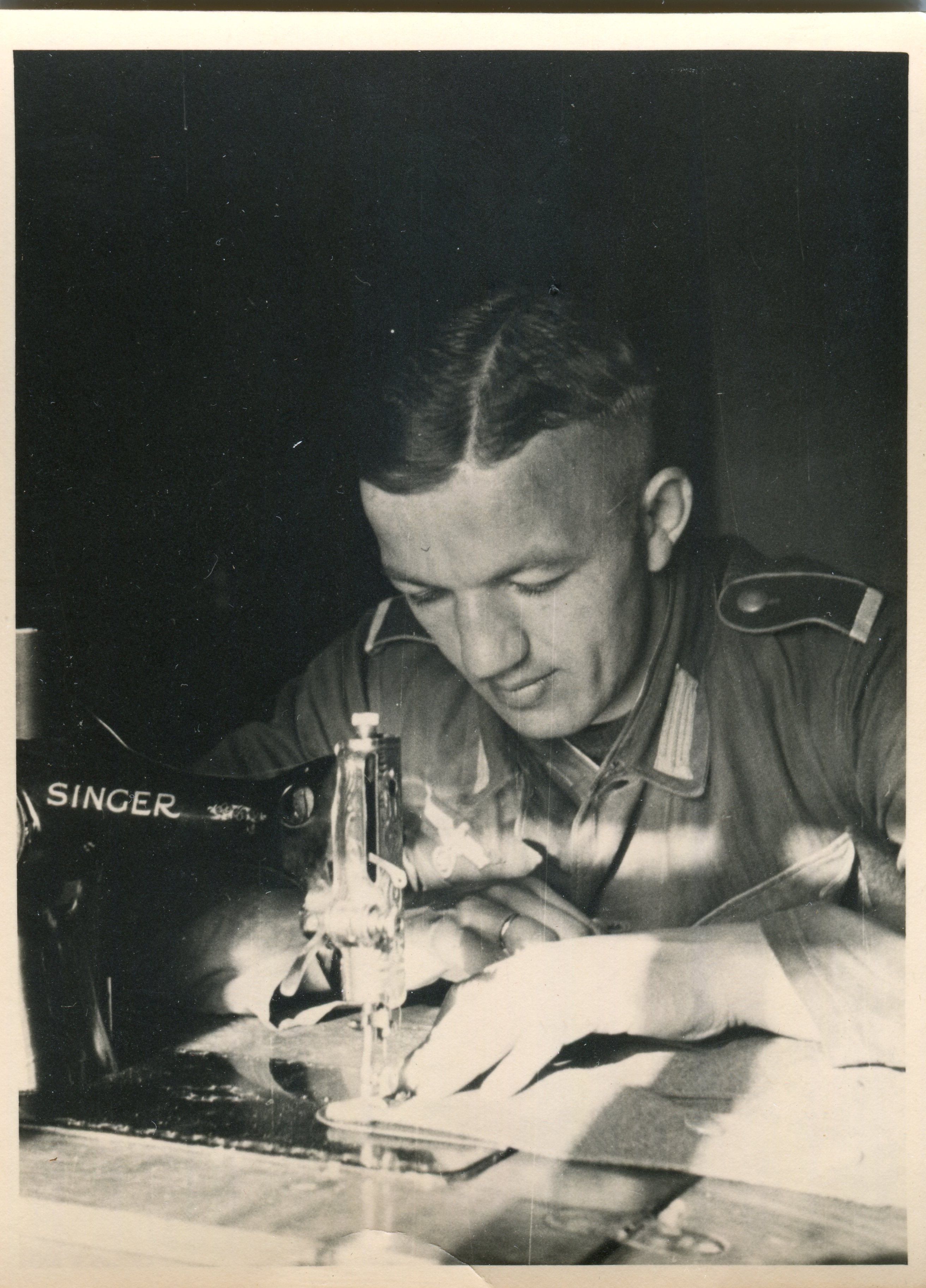
WW2 Schneider (Tailors)
Heer and Luftwaffe Schneiders altering, repairing, and refitting uniforms in field depots and billets.
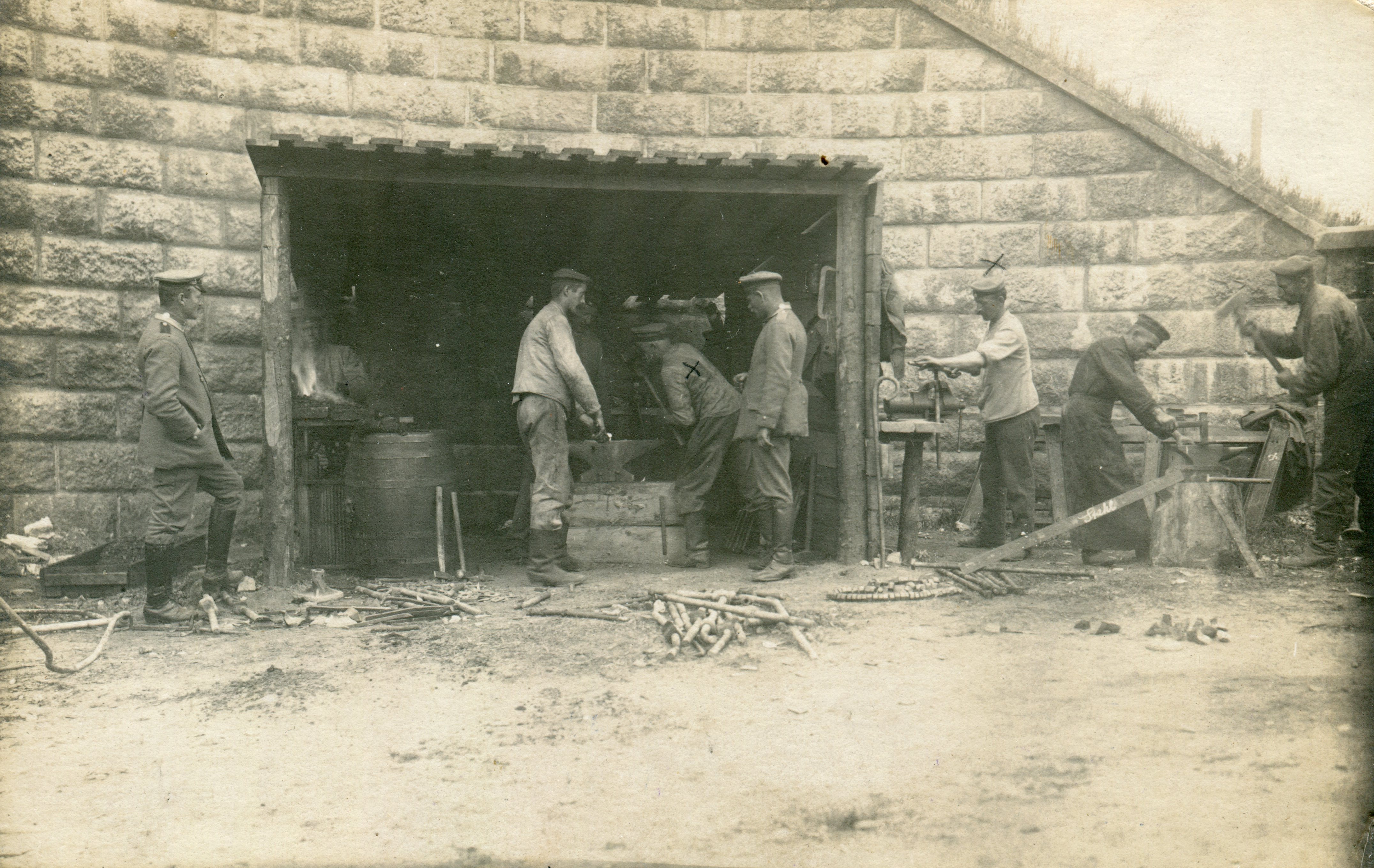
Schmiede (Blacksmiths)
Blacksmiths of WWI and WWII shoeing horses, repairing wagons, and maintaining the ironwork that kept transport moving.
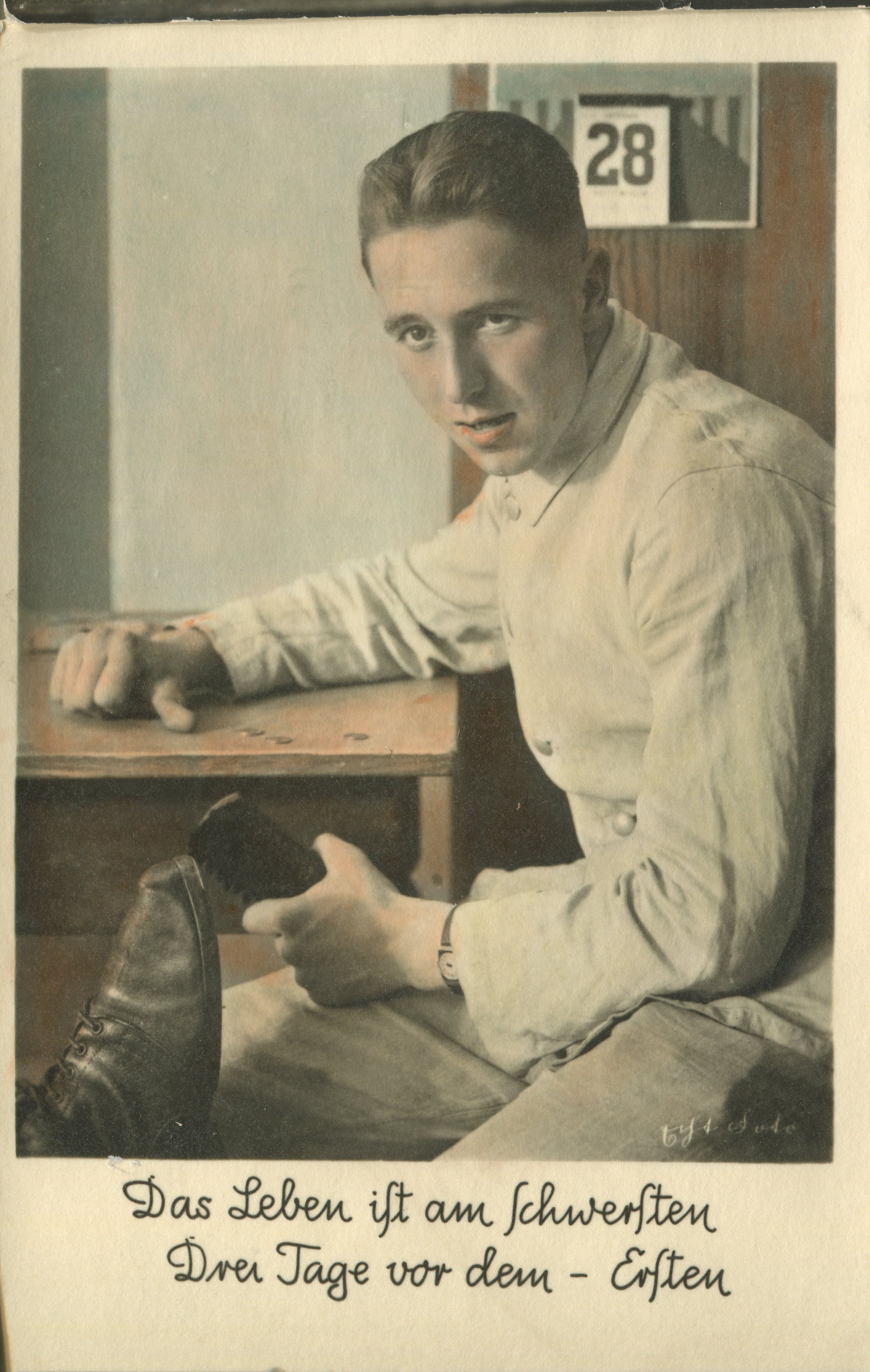
Boot Polishing
Daily boot care, cleaning, and polishing between duties and before inspection.
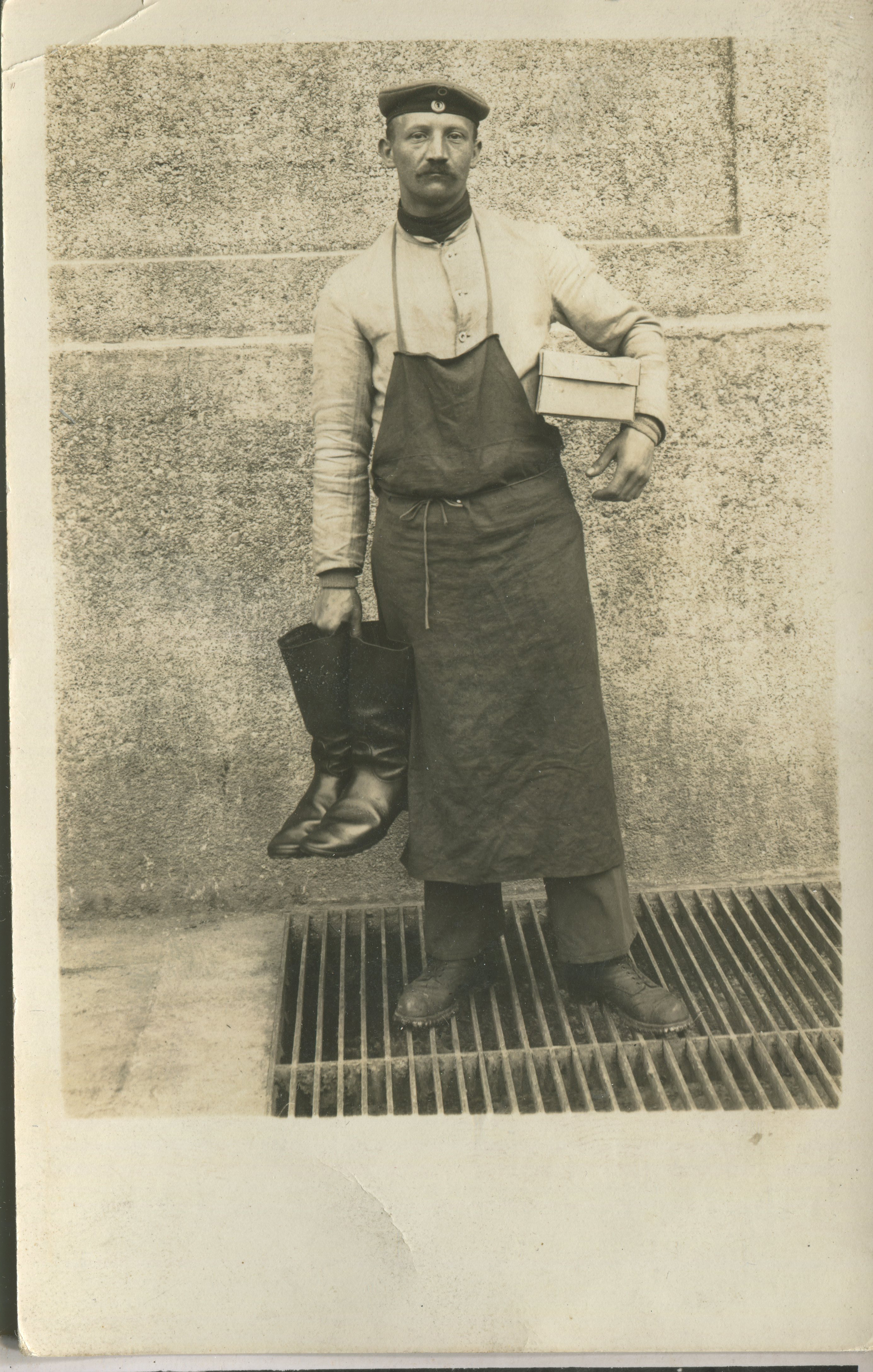
Boot Polishing WW1
Boot polishing and leather care among German soldiers during the First World War.
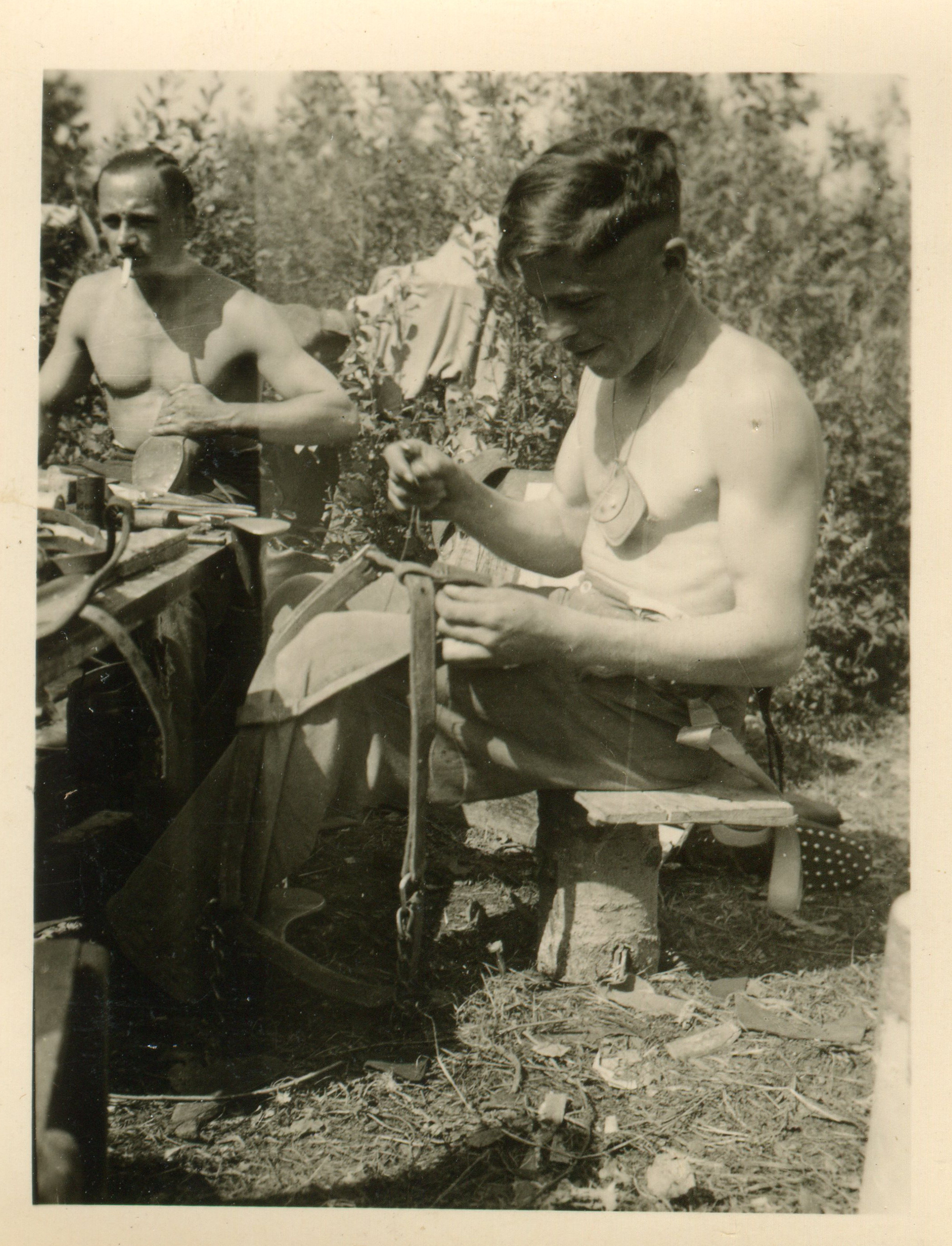
Sattler
Saddlers and leather specialists repairing tack, harness, and field leather gear for mounted and horse-drawn units.
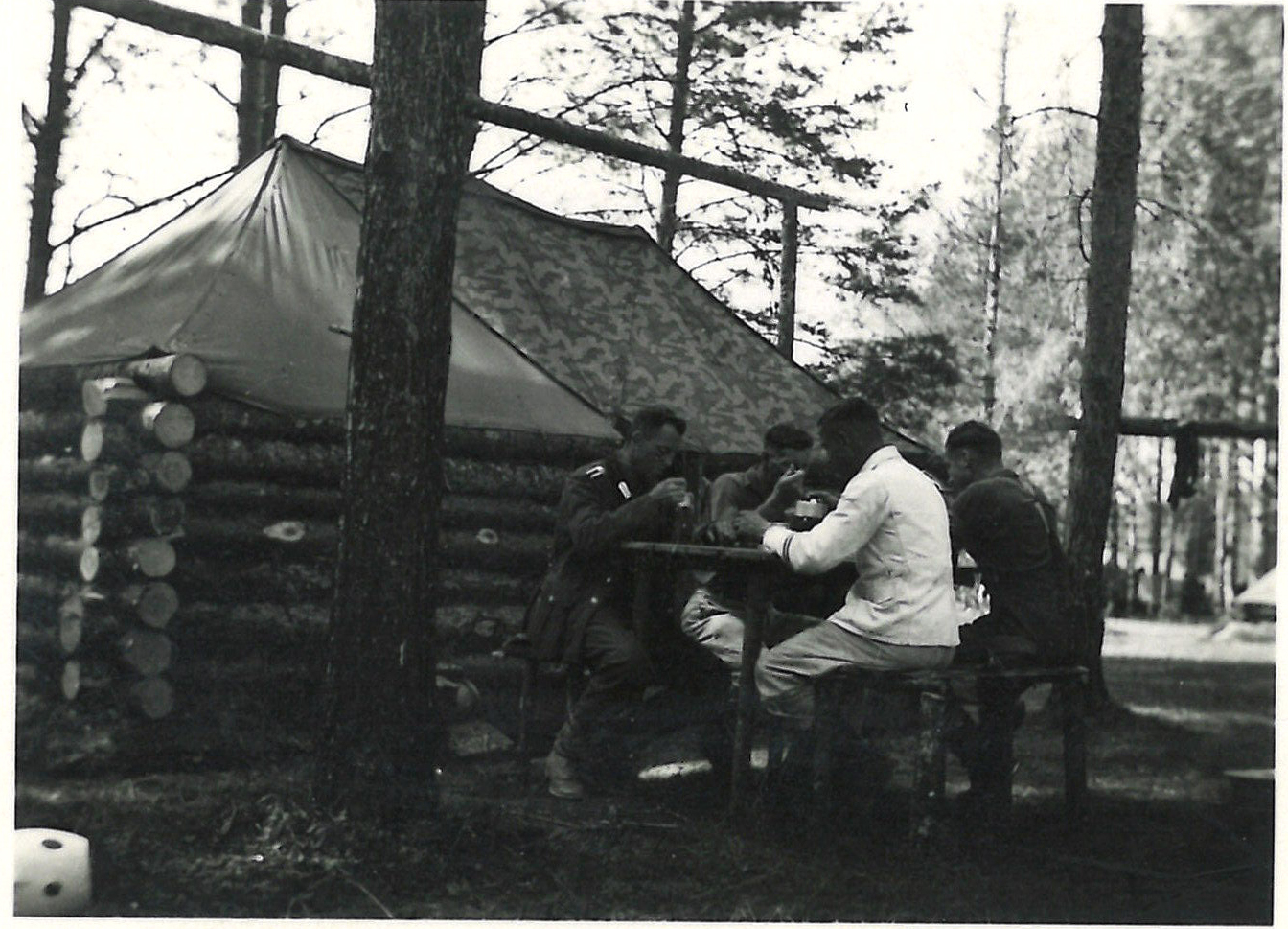
Zelt Structures
WW2-era zeltbahn shelters built over dugouts or raised on walls and frames to improve comfort and protection.